
Best known for Atonement—shortlisted for the Booker in 2001 and adapted into an Academy Award–winning film in 2007—Ian McEwan is back with another layered, thought-provoking novel in What We Can Know.
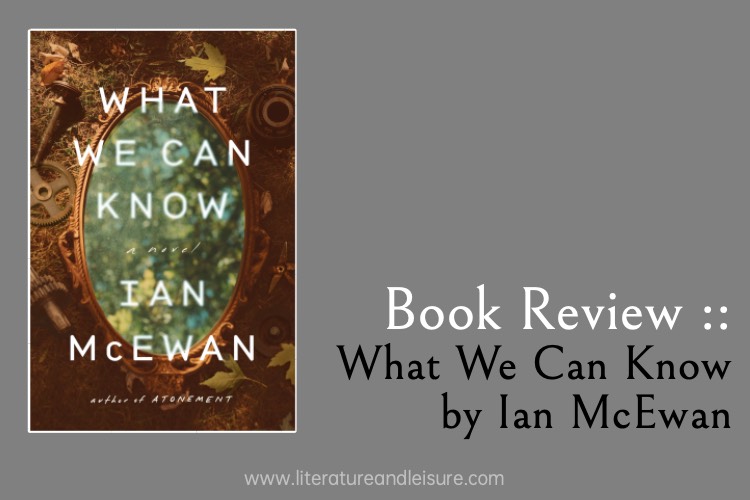
Part one of the story unfolds in a slightly dystopian age (2119), where a nuclear bomb detonated in the Atlantic has reshaped the globe. Vast stretches of land are underwater. Flora and fauna have diminished. Information and technology are harder to access, not easier. Political structures have collapsed in many places, and danger is part of the daily backdrop. Even cars are being pulled from the ocean floor as a form of steel harvesting.
At the center of the novel is Tom Metcalf, a literary scholar obsessed with a single vanished work: an elusive poem delivered orally at a 2014 dinner party. It was gifted by renowned poet Francis Blundy in honor of his wife, Vivian. The eight guests who were present that night were the only ones to ever experience the poem in full.
Tom’s quest to reconstruct the poem leads him through every artifact he can find—emails, texts, published works, and an array of secondary commentary from bloggers, journalists, and literary critics. These secondary sources, of course, are riddled with biases, theories, and wishful interpretations. He is also navigating a complicated relationship with a fellow scholar—an emotional subplot made thornier by his obsession with a literary phantom.
Then, there’s a part two of What We Can Know – from the perspective of Vivian – that I can’t discuss without revealing spoilers.
A Note for My Fellow English Majors
As an English major, I couldn’t help but think about how often we interpret primary texts through secondary sources—letters, journals, or recollections by others. As a part of our literary analysis, we read into what we think is meant in the primary text based on what is going on in the author’s life.
Without giving too much away, I think a case can be made that the conclusion of McEwan’s novel strongly evokes Jacques Derrida’s deconstructionist notion that “a text is just a text.” This is something that I’ve mostly rejected, but it What We Can Know offers an interesting discussion of that theory. (I’ll leave that little treat for my fellow lit nerds.)
Why This Review Comes After Publication
Normally, I review advanced reader copies well before publication—I love contributing to that pre-release buzz. But this time? I’m arriving late.
The reason: on my first attempt, this was a DNF. I just couldn’t connect. Onto the DNF shelf it went.
Then my feed filled with raves. Readers were comparing it to A.S. Byatt’s Possession—one of my all-time favorites. I couldn’t reconcile their enthusiasm with my own reaction, so I made a rare decision: I tried again.
A Completely Different Reading Experience
On the second try, it felt like I was reading an entirely different book. I was hooked almost immediately. I found myself sneaking in five- and ten-minute increments just to read another page or two. It’s my first five-star read in a long time—and it may end up being the best book I’ve read all year.
Like Atonement, What We Can Know deals with the difference between perception and reality. And, if Atonement was written for my years as a young adult, What We Can Know feels unmistakably tailored to where I am now: a life stage where relationships are more seasoned, more nuanced, and where the truths we cling to are rarely simple.
What This Book Is and Isn’t
Before I wax poetic about how everyone should read this, let me be clear: there are books with more beautiful prose, writers whose language deserves to be underlined and savored.
This is not that book.
Ian McEwan is, instead, a master storyteller. He builds narratives and characters that pull you in and make you care about them—flaws, bad choices, and all. His social commentary isn’t preachy or judgmental. It simply exists, inviting thought rather than demanding agreement.
And in What We Can Know, that mastery is on full display.
Book Club Discussions for What We Can Know
- McEwan centers this novel around a poem that no one can fully access. What does the absence of the poem say about memory, truth, or art? Discuss the title.
- Much of Tom’s research relies on biased or speculative secondary sources. How does the novel suggest we form truth—or fail to—when the “facts” are incomplete or filtered?
- How does the comparison between the “First Immortal Dinner” and the “Second Immortal Dinner” make you feel about literary analysis?
- The bleak future world (flooded, technologically diminished, politically fragile) is always there, but not always the focus. Why set this intimate literary mystery in such a dystopian landscape? How does the setting shape your understanding of the story?
- How does the future reality match or contradict what you would expect for life 100 years from now? What nuggets about the future did you find most interesting or believable?
- Discuss the relationship between Tom and Rose. How did the evolution of Tom’s research impact their relationship?
- The poem was intentionally delivered orally and never written down. What do you think Blundy’s motivations were? Does art still “exist” if it’s never recorded?
- Each dinner guest remembers the poem differently. What about their personal experiences impacts the impressions they carry with them of the poem? How did Blundy impact what they could recall, and do you think this was intentional?
- Did the revelations in Part Two surprise you? How do these revelations change what Tom believes is true about the poem, its author, and its subject? Before Part Two, what were your assumptions about the poem, its author, and its subject?
- Considering the deconstructionist concept that “a text is just a text”—independent from author intent. Do you agree with that assumption? Do you think this story reinforces this theory or not?
- If you’ve read Atonement or other McEwan novels, how does What We Can Know compare—for its themes, emotional impact, or storytelling style?
***
I was provided an Advance Reader Copy of What We Can Know by NetGalley in exchange for an honest review. What We Can Know was made available to all readers on Sept. 23, 2025.
Comments
Powered by Facebook Comments