
Tayari Jones’ latest novel, Kin, is set in the 1950s and 1960s and tells the story of Vernice and Annie, who call themselves “cradle friends” because they were raised together from birth. An Atlanta native and Emory University English faculty member, Jones has written another successful novel in Kin, one that makes me proud to claim her as a hometown talent.
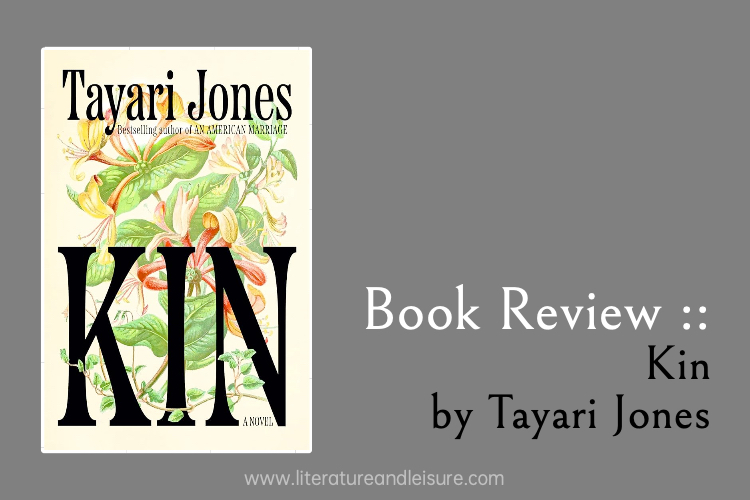
I first came to Jones through Leaving Atlanta, her haunting novel about the Atlanta child murders, told from the perspective of children living in the communities where the crimes were unfolding. It was utterly captivating. I remember that time well, even though I lived 60 to 70 miles northeast of the events. Anyone my age who grew up in Georgia likely remembers the chilling nightly PSA: “It’s 10 p.m. Do you know where your children are?” (For the record, those words probably did more to heighten childhood anxiety than they ever did to help parents keep track of their kids.)
The second novel I read by Jones, An American Marriage, was equally compelling—an engaging and thoughtful exploration of love, injustice, and commitment. So when I saw that she had a new book coming out, I jumped at the chance to read it.
Although Vernice and Annie are both motherless and bound by their shared childhood, their lives take sharply different paths. Vernice’s mother was murdered by her father, a trauma that shapes her early years in the small Louisiana town of Honeysuckle. She eventually leaves for Spelman College in Atlanta, where she encounters a world of affluence and privilege, even as it exists alongside deep inequality.
Annie’s story unfolds differently. When she is just three days old, her mother, Hattie, leaves her in the care of her own mother—Annie’s grandmother—and disappears. Vernice’s Aunt Irene warns Annie not to waste her life waiting for her mother to return, especially if she hasn’t come back by the time Annie comes of age.
Hattie does return, but only briefly—just a few hours one afternoon when Annie is a teenager, but not to see her daughter. She does, however, leave behind an address, offering a clue to where she has been living. That knowledge proves irresistible. As soon as graduation arrives and while Vernice prepares for Atlanta, Annie heads to Memphis in search of her mother.
Though the two young women stay in touch through letters, they are each moving toward lives that seem unimaginable to the other. When Annie faces a crisis too large to handle on her own, she turns to Vernice for help. But Vernice is carrying a secret of her own—one that will pose the greatest test their friendship has ever faced.
In charting these two divergent lives, Jones explores themes of belonging, coming of age, and mothering with nuance and grace. She writes with particular insight about women’s friendships—their depth, their resilience, and their complicated emotional terrain.
Kin would make an excellent selection for a women’s book club. There are several fascinating secondary characters I haven’t touched on here, all of whom deepen the contrasts between Vernice’s and Annie’s experiences. Highly recommend.
Book Club Discussion Questions (Spoilers!)
- Vernice and Annie are raised in the same community with a good bit in common, and yet, their diverse destinies feel predetermined. How much say do each of them have on their own future, and why do you think that is?
- How does Vernice’s bus incident impact her start in Atlanta?
- Lulabelle and Mrs. McHenry can each be considered mother figures for Annie and Vernice. How are they similar, and in what ways are they different?
- Vernice says, “We come to love people in many ways.” Compare Vernice’s two love interests. Does one feel more real than the other?
- As Vernice and Annie live out their new lives apart from each other, does one of them seem to be more impacted than the other by the racial inequity of the time?
- Is Bobo justified in leaving Annie? At what point do you think Annie could have changed his mind?
- Vernice’s secret becomes a defining test of their relationship. How did it challenge your understanding of her character, and did it change where your sympathies lay?
- Kin explores whether people can truly accompany one another through radically different life paths. By the end of the novel, what do you think Jones is saying about the endurance—and limits—of women’s friendships?
- How does superstition, including the belief in the supernatural, impact each of the girls’ stories?
- Who is your favorite minor character and why?
***
I was provided an Advance Reader Copy of Kin by NetGalley in exchange for an honest review. Kin will be available to all readers on Feb. 24, 2026.

Comments
Powered by Facebook Comments